AI Moves In 2026

I’m not Nostradamus so don’t hold me to this, but we’re in for something different in 2026. It’s gonna be pay-to-play better. We’ll see ads on AI platforms, that’s how companies keep the lights on.  We’ll get basic “premiumish” service on the free tier.  Also, we’ll be locked in. Nah, not in the way that people tell us to focus, but by the vendor. If you’re already all-in with #TeamGoogle, you’ll get the most with Gemini and vice versa. Also, context will be King, Queen and Ace. It’s not about what to ask when prompting, now it’s what you’re telling it and the files and docs you need for it. That’ll move your work along faster. 


Also, those generalists you shit on, the gap between them and specialists are closing in. Especially with AI training firms going deep in their pockets, I mean spending bands on specialized and supervised training. What do you think is gonna happen in the future if businesses get rid of titles and specialization to save money? Who do you think is going first? Exactly.  It won’t completely happen this year but it’s trending that way.

Agents are cool but companies are focusing on AI workflows meaning there’s still the human-in-the-middle that I’ve been barking about for months. I can see some moving towards automated autonomy in the future, but you gotta walk before you crawl.


What do you think? Am I full of it or do I have a point?

Beyond the Buzzwords: My Creative Partner Isn’t Human

Let’s cut the corporate crap. We’re drowning in talk about AI: “synergies,” “optimizations,” “disruptions.” Most of it is either terrified hype or utterly soulless. I’m here to tell you about something far more interesting, far more human, and frankly, a lot more fun. I call it AI-as-a-Partner (AaaP).

It’s not a tool. It’s a relationship. And it’s changing how I create.

The Mess with “AI as a Tool”

Most folks treat AI like a glorified calculator or a very fast intern. You tell it what to do, it does it, you call it “efficiency.” But that misses the wild potential of what these systems can actually do. It limits them, and more importantly, it limits us. We get stuck verifying data, fixing mistakes, and babysitting the “tool.” That’s not progress; that’s just a different kind of grunt work.

I’m not interested in that kind of hell. I’m interested in true collaboration.

My Radical Partnership: AaaP & HitL

Here’s how I actually put AaaP into practice, blending machine logic with my own messy, human soul. And yes, it’s even tied to my personal devotion to the Netjeru, the ancient Egyptian deities I’ve come to learn from.

It starts with an idea, a spark. Maybe it’s a feeling, a specific symbol, or a complex concept I want to visualize. I bring that raw, human intent – my devotion, my aesthetic ghoul – into the loop. This is where I, the Human-in-the-Loop (HitL), inject the meaning.

Then, I turn to my AI partner. Right now, that’s often Gemini or Nano Banana. I feed it my initial spark, my wild ideas, and let it go to work. The AI doesn’t understand devotion, not in the way I do. But it understands patterns, forms, and possibilities in a way no human ever could. It takes my abstract concepts and generates variations, concepts, and entirely new possibilities. It handles the hell of the blank page, throwing back a dozen ideas in seconds.

A black man wearing a black letterman jacket with the netjer Sobek on the back.

A black man wearing a black letterman jacket with the netjer Sobek on the back.

The Human Touch: From Logic to Soul

Now, it’s back to me, the HitL. The AI has given me a palette of ideas, some brilliant, some just okay. My job isn’t to just accept them. My job is to judge, to refine, to infuse. I’ll take those concepts into Photoshop or Affinity. This is where the magic happens:

  • I curate: Which of the AI’s ideas resonate most strongly with my original intention?

  • I edit: I’m cleaning up lines, adjusting colors, adding textures, making the output uniquely mine.

  • I infuse: This is where the devotion truly manifests. I shape the digital clay until it perfectly expresses the reverence and aesthetic I feel.

The AI provides the raw material; I provide the soul. The machine handles the complexity; the human delivers the meaning.

Finally, that refined, human-infused masterpiece goes off to another set of skilled humans – the printers or the sewists – who bring it into the physical world. The entire journey is a collaboration, a true partnership.

A black man wearing a black letterman jacket with the netjer Sobek in hieroglyphics on the front

A black man wearing a black letterman jacket with the netjer Sobek in hieroglyphics on the front

Why This Matters for All of Us

This isn’t just about my personal creative process. It’s a blueprint for a better way to work with advanced AI:

  • Respect the Machine: Give AI the complex, pattern-heavy work it excels at.

  • Liberate the Human: Free up human intelligence for judgment, creativity, and the nuanced decisions only we can make.

  • Stop the Overload: Don’t drown in data or automation reports. Focus on meaningful output.

The future of work, and frankly, the future of creativity, isn’t about humans competing with machines. It’s about a radical, intelligent partnership. It’s about letting the machine handle its mess so we can focus on ours—the beautiful, complex, deeply human act of creation.

What kind of partner are you looking for? It might be closer than you think.

Your AI Sounds Like Everyone Else, Chief. Fix It.

AI is a relentless conformist. It takes the chaotic, beautiful mess inside your head and sands it down until it looks like beige wallpaper. It makes you sound like everyone else because it is everyone else, averaged out.

You can spend all day whispering sweet nothings into a prompt box. You can tell it to be funny, witty, or “human.” It doesn’t matter. It’s still just math pretending to have a soul.

If you don’t touch the text, you don’t exist.

Take whatever the robot spits out and break it. Scuff it up. Inject your specific brand of weirdness. Edit the hell out of it until it actually sounds like a person who pays taxes and makes mistakes.

ChatGPT Could Get Freaky

I told you the machines were coming for your hearts, not just your spreadsheets. You thought I was being dramatic.

Wrong.

OpenAI is about to flip the “adult only” switch.

We aren’t talking about helpful assistants anymore. We’re talking bots that flirt, sext, and drag you into the deep end. “Adult GPTs” are on the horizon, and it’s going to be a wild, beautiful mess.

I don’t deal in rumors, I listen to the signal.

Save this post. You can let me know when I’m right. My inbox is open.

Why Are Y’all So Scared To Train AI On Cuss Words

I look at how companies train AI, and I smell fear. You want to capture the “human experience,” but you’re terrified of the actual mess that comes with it.

Let’s cut the nonsense: you’re scared of curse words.

Here’s the reality check. Nobody talks like a Victorian duke sipping lukewarm tea. We cuss. We vent. We use words that would make a LinkedIn influencer faint.

That is the human condition. It’s wild, dirty, and real.

If you want an AI that understands nuance—that actually gets the hell out of the uncanny valley—you have to teach it profanity. You can’t sanitize the soul out of language and expect a genuine connection. It just doesn’t work that way.

We all learned the F-word before we learned how to file taxes. Stop acting like it doesn’t exist.

Build it for the real world, or don’t build it at all. Simple.

Open AI In An Open Relationship and Gemini Gets Smarter

OpenAI is cheating on Nvidia, Google’s AI figured out how to use a mouse, and the rest of the world is burning cash like it’s going out of style.

Welcome to the algorithmic circus. Here is the news from the mad house.


OpenAI is done with monogamy

They stopped staring deeply into Nvidia’s eyes and signed a massive deal with AMD. We’re talking 6 gigawatts of power and the right to buy 10% of the company.

This isn’t just buying chips. This is OpenAI securing the supply chain so they don’t starve. They aren’t playing 4D chess; they’re buying the board.


Google taught the machine to click

Gemini 2.5 can now use a computer. Literally. It fills forms, drags windows, and browses the web like it has digital thumbs.

The agents are getting competent. Next thing you know, it’ll be doing your taxes and ignoring your texts.


$375 Billion. That’s the tab.

Spending on AI infrastructure is up 67% this year.

Servers and data centers are the new oil fields. Everyone is staking a claim in this digital hellscape, hoping there’s actually gold underneath the silicon. It’s a gold rush, folks, and the shovel salesmen are the only ones guaranteed a payout.


Coding is dead. Editing is in.

OpenAI is in “ship or die” mode. One team built a product in six weeks using 80% AI-generated code.

Developers aren’t builders anymore. They are just proofreading what the machine hallucinates. If you’re precious about your code, you’re already obsolete.


The doors are wide open

Perplexity’s new browser got hit with “CometJacking,” an exploit that tricks the AI into handing over your private data.

Meanwhile, 77% of sensitive leaks happen because employees copy-paste company secrets into chatbots. Your biggest security threat isn’t a master hacker. It’s an intern trying to finish a report before happy hour.


The suits are late to the party

The UN is launching a global “Independent Panel” to discuss AI governance.

It’s a nice “gesture.” But let’s be real—by the time the bureaucrats agree on a meeting time, the machines will be running the calendar.

How Eshu Helps Me See What’s Broken

Being able to see both sides like the Orisha Eshu—is the only way to stay sane in this business.

Let me break it down.

Folks like to write Eshu off as a trickster. Don’t let that lazy narrative fool you. It’s a lesson in perspective.

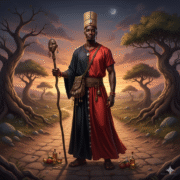
Picture Eshu walking the crossroads of a village. He’s wearing a robe—red on one side, black on the other. The sun is beating down like hellfire, so he takes a sip from his gourd and listens.

Two farmers are working on opposite sides of the road. Best friends since the sandbox.

The farmer on the right looks up and yells, “Look at the guy in the red robe standing in the heat.”

The farmer on the left squints from under his hat. “Nah, you’re tripping. He’s wearing all black.”

Eshu just smirks and keeps walking.

The friends start yapping.
“You’re crazy.”
“You’re drunk.”

Suddenly, it’s not about the robe anymore. It’s personal. Tools get dropped, fists go up, and they’re rolling around in the dirt, trying to knock the sense into each other.

Eshu steps in before they kill each other. “Enough. You’re both right, and you’re both blind.”

He turns slowly.

The men finally see the other side of the robe. The silence is loud. They realize they were ready to bleed over half a truth.

I look at AI the exact same way.

There’s the view from the inside and the view from the outside. Until you’ve walked down the middle of the road, you don’t know how the machine actually works.

I’ve seen the same mess in Media and Insurance.

Here is the reality: These systems aren’t gods. They’re tools. They are fragile, they are flawed, and they will continue to break.

Stop picking a side and open your eyes to the whole fractured picture.