A Picture Is Worth A Million Dollars

I know y’all have heard the old cliché: A picture is worth a thousand dollars. But today it’s worth even more. For real, it comes in the form of political clout and monetizing our attention. When visuals are weaponized for profit, media literacy is a critical skill that we need to rely on. Here’s how some companies are being monetized, manipulated and full of biases.

AI and Deepfakes

Welcome to the era of AI where anyone can be, say or do anything and not actually do said thing. The cost of AI image generation is so cheap that it’s become expensive. People and brands have lost money because of fake disasters that affect the market. Some have even suffered brand damage due to them.

Media Literacy Tip: Stop treating images as the only proof. Do some deeper research.

Clickbait and the Algorithm

You know those thumbnails and hooks that companies, influencers and platforms use? They used them to emotionally hijack you on purpose. AI images are used to trigger you and that equals big money for the producer. Every time we click on some bullshit without checking, they get to cash a check you paid for twice.

Media Literacy Tip: If an image pisses you off, pause. Do some more research on it.

Cutting Context For Cash

I used to be a photographer, video editor, web designer and graphic designer, so I know for a fact that a single, carefully cropped photo can raise big bucks overnight. Especially in politics. These photos are stripped of nuance and have a “Donate Now” or “Click Here To Stop (Name of Political Opponent)” call-to-action before the public has any context behind it. Hint, hint. It’s already happened and millions fell for it.

Media Literacy Tip: Before you bust open that wallet, ask: What’s happening outside of the frame? Do some more research.

The Racialized Lens

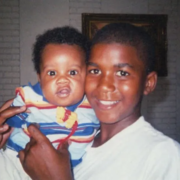
Yep, you in the back with the stank face, media can be racist depending on how it’s spun. As a matter of fact, my undergrad senior paper was about the perception of Black men in media. But, that’s another story. We see the racialized lens all of the time. A white suspect is shown with family, at church or polished in some way, while a Black victim doesn’t get the same mercy. They’re depicted in some of the worst ways possible with low-quality pics, dressed in a certain manner with a “thug spin,” different hand gestures that racist media claims are “gang signs,” or even a hairstyle. It’s all intentional. This visual framing impacts sympathy, legal funding and systematic outcomes. It’s bullshit strategic negative branding. A dehumanizing photo can cost a life, livelihood or freedom.

Media Literacy Tip: Read up on racial biases and search for examples online.

Pictures are now just more than snapshots of reality, they’re engineered to drive engagement, exploit biases and grab your data. The next time you see a picture that tugs at you on your feed, don’t just interact with it. Ask who’s gonna profit from how you feel.

How Eshu Helps Me See What’s Broken

Being able to see both sides like the Orisha Eshu—is the only way to stay sane in this business.

Let me break it down.

Folks like to write Eshu off as a trickster. Don’t let that lazy narrative fool you. It’s a lesson in perspective.

Picture Eshu walking the crossroads of a village. He’s wearing a robe—red on one side, black on the other. The sun is beating down like hellfire, so he takes a sip from his gourd and listens.

Two farmers are working on opposite sides of the road. Best friends since the sandbox.

The farmer on the right looks up and yells, “Look at the guy in the red robe standing in the heat.”

The farmer on the left squints from under his hat. “Nah, you’re tripping. He’s wearing all black.”

Eshu just smirks and keeps walking.

The friends start yapping.
“You’re crazy.”
“You’re drunk.”

Suddenly, it’s not about the robe anymore. It’s personal. Tools get dropped, fists go up, and they’re rolling around in the dirt, trying to knock the sense into each other.

Eshu steps in before they kill each other. “Enough. You’re both right, and you’re both blind.”

He turns slowly.

The men finally see the other side of the robe. The silence is loud. They realize they were ready to bleed over half a truth.

I look at AI the exact same way.

There’s the view from the inside and the view from the outside. Until you’ve walked down the middle of the road, you don’t know how the machine actually works.

I’ve seen the same mess in Media and Insurance.

Here is the reality: These systems aren’t gods. They’re tools. They are fragile, they are flawed, and they will continue to break.

Stop picking a side and open your eyes to the whole fractured picture.

How to Spot a Deepfake (When the Mask Slips)

They say the camera never lies. Cute line. Problem is, the camera’s now a damn liar with a PhD in deception and a GPU to match. Welcome to the age of deepfakes where anyone can borrow your face, jack your voice, and make you the star of a film you never signed up for.

This isn’t sci-fi anymore. It’s here. Politicians giving speeches they never gave. Celebrities dropping tracks they never recorded. Your aunt forwarding you a video of the Pope in a Balenciaga coat like it’s gospel truth. And the wild part? Most people can’t tell the difference.

But you? You’re not gonna be most people. Consider this your survival guide to spotting the cracks in the mask, the glitches in the Matrix. Because in a world built on illusions, media literacy isn’t a nice-to-have, it’s armor.

The Eyes Don’t Lie (But the AI Thinks They Do)
Real people blink like jazz, sometimes slow, sometimes rapid, never on beat. Deepfakes? They stare too long, or blink like they just learned how five minutes ago. Pupils don’t catch the light right. Eyes turn glassy, hollow. Dead giveaways. Literally dead eyes.

The Skin Is Too Damn Perfect
Humans got texture. I’m talking pores, scars, wrinkles, stress. AI hates imperfection, so it airbrushes everyone like a budget Instagram filter. Look for blurring around the hairline, beard, or jewelry. If it looks like someone smeared Vaseline on the screen, you’ve caught a fake.

The Mouth Betrays Them
The mouth is sloppy. Lip-sync a half-second off. Teeth blurred together like a discount Halloween mask. Corners of the mouth flicker, glitch, or just… feel wrong. It’s the same energy as when someone says, “trust me,” and you know damn well not to.

The Soundtrack Doesn’t Match the Movie
Voice clones are smooth, too smooth. No quirks, no stutters, no breaths,just sterile perfection. Sometimes the audio feels pasted on top of the video instead of coming from the room. Like watching karaoke with bad lip-sync, but creepier.

The Background Is a Snitch
Edges give it away. Check glasses, hands, earrings and microphones. AI stumbles on detail work, melting things like Dalí got hired as set designer. Shadows betray them too: nose points left, shadow points right. Physics doesn’t play favorites, and it sure as hell doesn’t glitch.

They’re Too Perfect
Nobody speaks like a flawless script. Politicians stutter, singers mumble, CEOs cough. If your subject suddenly sounds like a TED Talk polished with holy water, question it. If the words feel engineered to make you mad, scared, or worshipful? You’ve just been emotionally hacked.

The Gut Check
You’ll feel it before you spot it. Something sterile. Something off. Like reality bent through a funhouse mirror. Trust that instinct. It’s your brain catching micro-glitches faster than your eyes.

Here’s the Play
Don’t just watch, hunt. Search for cracks in the mask, mismatched light, hollow sound, or that weird vibe you can’t quite name. AI can fake a face, but it can’t fake the messiness of being human.


Author Bio:

Justin Anderson is a Multipassionate Strategist and founder of Anderson Blackstar Enterprises, the force behind Madly Multipassionate and Anderson Blackstar Media. He builds brands, stories, and systems that blend truth, power, and strategy.